
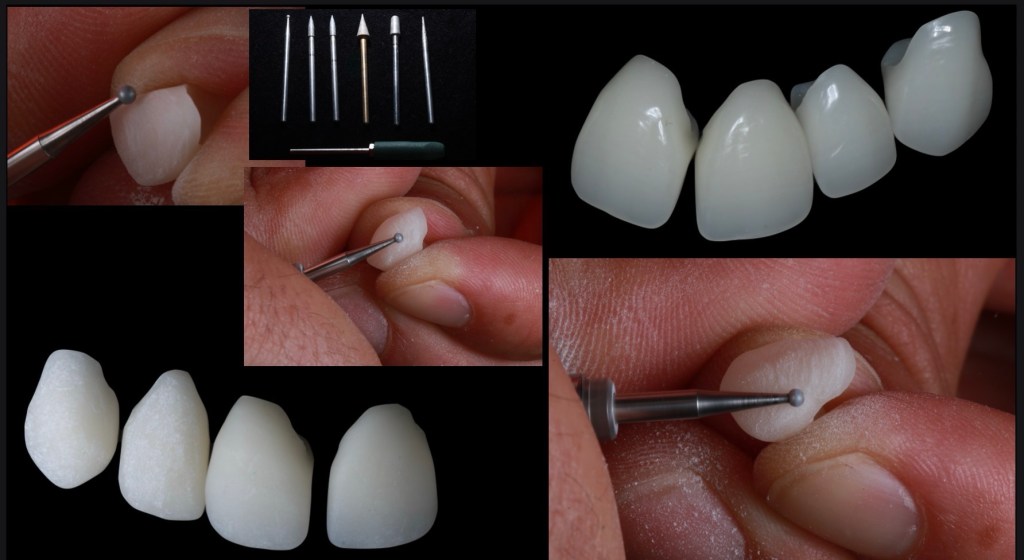
✨ The difference between a restoration that looks placed and one that looks natural often comes down to one thing: surface texture. When we fabricate anterior ceramic restorations, it’s easy to focus entirely on shade and translucency — and stop there. But the human eye doesn’t see color in isolation. It reads light, and light tells the whole story. 🦷 Natural anterior teeth are anything but flat. They feature: • Vertical developmental lobes that catch and reflect light • Subtle perikymata (horizontal growth lines) that diffuse light softly • Incisal micro-anatomy — small irregularities that mimic enamel wear • Cervical convexities that transition naturally into the gingival architecture When a ceramic restoration is left overglazed or polished to a mirror finish without this texture, it reflects light uniformly — and the brain immediately reads it as artificial. The restoration may be the perfect shade, perfectly seated, and still look like a “cap.” Recreating surface anatomy is how we give ceramics optical depth and vitality. In my workflow, I use diamond burs to carve in lobal structure and fine grinding instruments to establish perikymata before final polishing. The finishing sequence is just as important as any other step in fabrication — not an afterthought. The restorations in these images were textured by hand using a systematic approach: lobes first, then horizontal lines, then incisal detailing. The difference between pre- and post-texturing is immediately visible — even before any staining or glazing. Esthetics is not just about color. It’s about how a surface interacts with light. Are you incorporating surface texture into your anterior restorations? I’d love to hear how you approach it. 👇
#DentalLab #CeramicRestorations #DentalEsthetics #AnteriorTeeth #DentalProsthetics #DentalTechnician #Ceramics #DentalArt #SmileDesign #DentistryLife
-by Thiago Soares PORTO


Leave a Reply